
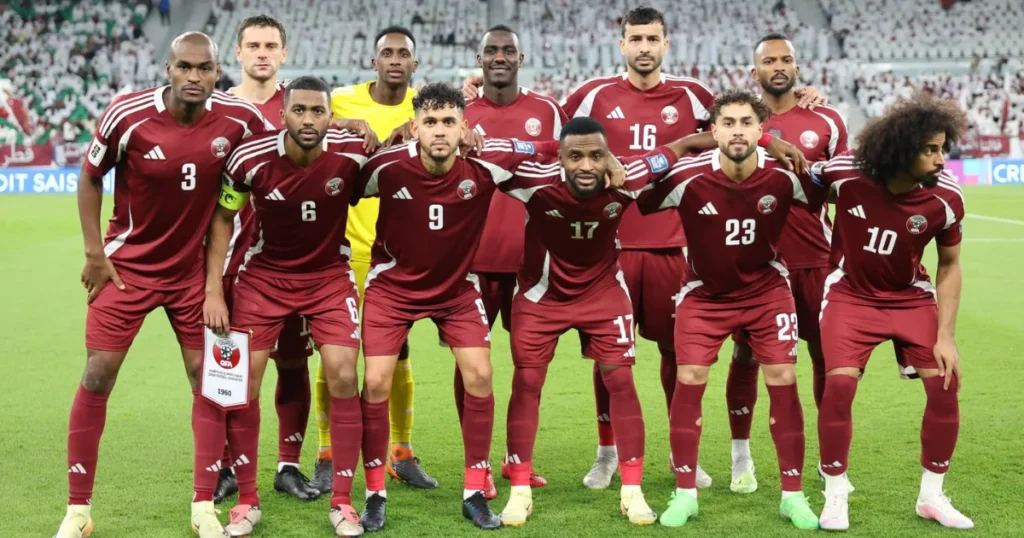
The Qatar national football team, often called “Al Annabi” or “The Maroons” for their iconic red-and-white kit, has become one of the most intriguing stories in modern international soccer. From humble beginnings in the oil-rich Gulf state to hosting and qualifying for back-to-back FIFA World Cups, this squad embodies ambition, investment, and unyielding passion. If you’re searching for insights into the Qatar football team, their journey is a rollercoaster of triumphs, setbacks, and relentless progress. As they gear up for the 2026 FIFA World Cup in North America, the team’s blend of homegrown talent and strategic naturalization has them poised for more headlines. In this deep dive, we’ll explore everything from their storied history to the electric fan culture that fuels them, all while keeping an eye on their Qatar FIFA ranking and the highly anticipated Qatar next match.
Football in Qatar isn’t just a sport—it’s a national obsession that mirrors the country’s rapid transformation. With state-of-the-art stadiums dotting the landscape and a youth academy system rivaling Europe’s best, the Qatar football team has evolved from regional underdogs to Asian powerhouses. Whether you’re a die-hard supporter or a curious newcomer, buckle up as we unpack what makes this team tick.
The History of the Qatar Football Team: Building from the Sand Dunes
The roots of the Qatar football team trace back to the late 1960s, when the sport first took hold amid the dusty pitches of Doha. The Qatar Football Association (QFA) was formally established in 1965, but it wasn’t until 1970 that they joined FIFA, marking their official entry into the global game. Their debut international match came that same year against Bahrain—a narrow 2-1 loss that set the tone for early struggles. In those formative years, the team was often outmatched in the Gulf Cup of Nations, a regional tournament that’s been a proving ground for Arab sides since 1970.
By the mid-1970s, glimmers of promise emerged. Hosting the 1976 Gulf Cup, Qatar finished third, thanks to emerging stars like Mansour Muftah, who became the team’s first true icon. Muftah’s flair and goal-scoring prowess—netting over 40 international goals—helped solidify Qatar’s place in the Arab football scene. The 1980s brought more heartbreak, including a runner-up finish in the 1984 Gulf Cup final against Iraq, but also frustration in FIFA World Cup qualifiers. Attempts for the 1982 and 1986 tournaments ended in early exits, highlighting the gap between Gulf talent and broader Asian competition.
The 1990s and early 2000s were a mixed bag. Qatar claimed their first Gulf Cup title in 1992, beating Saudi Arabia 1-0 in the final, a victory that sparked nationwide celebrations. Yet, World Cup dreams remained elusive; they failed to advance past preliminary rounds for 1994, 1998, and 2002. Behind the scenes, however, Qatar was investing heavily. The Aspire Academy, launched in 2004, revolutionized youth development, scouting and training talents from across the globe. This period also saw the rise of naturalized players, a controversial but effective strategy that infused the squad with diverse skills.
The 2010s marked a turning point. Under coaches like Bruno Metsu and later Felix Sanchez, the team climbed the ranks. Their 2011 AFC Asian Cup triumph—defeating Japan 3-0 in extra time for their first continental title—was a seismic shock. It wasn’t just a win; it was a statement. Sanchez, a Spaniard with deep ties to Qatari youth setups, took over in 2017 and engineered a golden era. Back-to-back Asian Cup victories in 2019 (beating Japan 3-1 in the final) cemented their dominance. Hosting the 2022 FIFA World Cup, while controversial, put Qatar on the map. Though they exited in the group stage with three losses, the experience was invaluable.
Today, as of November 2025, the Qatar FIFA ranking sits at a respectable 51st globally, with 1,461 points—a climb from their pre-2019 lows around 100th. Regionally, they’re sixth in Asia, trailing powerhouses like Japan and Iran but ahead of many Gulf rivals. This ranking reflects steady progress, bolstered by consistent performances in qualifiers and friendlies. The Qatar football team’s history isn’t one of overnight success; it’s a testament to vision and grit, turning a small nation into a soccer contender.
Major Achievements: Trophies, Milestones, and Record-Breaking Moments
What sets the Qatar football team apart is their trophy cabinet, which punches way above their population weight. Their crowning jewel? The AFC Asian Cup. Winning it in 2011 as underdogs (ranked 105th entering the tournament) was pure magic—goals from Sebastián Quintana and a heroic semifinal shootout against Uzbekistan. The 2019 repeat, on home soil, was even sweeter: undefeated, with Almoez Ali’s record-breaking 9 goals in a single edition.
Regionally, the Gulf Cup has been a happy hunting ground. Three titles (1992, 2004, 2014) and multiple podium finishes showcase their Gulf supremacy. In 2004, they edged Saudi Arabia 3-2 in the final, with Indridi Sigurdsson’s leadership shining through. The West Asian Football Federation Championship adds two more stars (2008, 2010), proving Qatar’s regional edge.
On the global stage, milestones abound. Hosting and auto-qualifying for the 2022 World Cup was historic—the first Arab nation to do so. Though results were tough (0-2 Ecuador, 1-3 Senegal, 1-3 Netherlands), they became the first host to score in their opener since 2006. In 2023, they stunned at the CONCACAF Gold Cup, reaching the semifinals as guests and beating Honduras 1-0 in the quarters. Their latest feat? Qualifying for the 2026 World Cup on October 14, 2025, with a gritty 2-1 win over the UAE— their first earned spot, not gifted by hosting.
Individual accolades pepper their story too. Almoez Ali’s 2019 Golden Boot and Ballon d’Or shortlist nod highlight homegrown brilliance. These achievements aren’t just silverware; they’re blueprints for smaller nations dreaming big in football’s elite circles.
To help you grasp their upward trajectory, here’s a handy table summarizing key milestones:
| Year | Achievement | Details | Impact on Qatar FIFA Ranking |
|---|---|---|---|
| 1970 | FIFA Membership | Joined global body; debuted vs. Bahrain | N/A (Rankings start 1993) |
| 1976 | 3rd in Gulf Cup | First podium as hosts | Established regional presence |
| 1992 | Gulf Cup Winners | 1-0 vs. Saudi Arabia in final | Boosted to ~60th |
| 2011 | AFC Asian Cup Champions | 3-0 vs. Japan in final | Jumped from 105th to 51st |
| 2019 | AFC Asian Cup Champions (Repeat) | Undefeated; Almoez Ali’s 9 goals | Peaked at 37th |
| 2022 | Hosted FIFA World Cup | First Arab host; group stage exit | Dropped to 58th post-tournament |
| 2025 | Qualified for 2026 World Cup | 2-1 win vs. UAE | Climbed to 51st (Nov 2025) |
This table underscores how each triumph correlates with ranking surges, making the Qatar football team’s progress crystal clear for readers tracking their ascent.
Key Players: Stars Who Light Up the Pitch for the Qatar Football Team
The modern Qatar football team thrives on a mix of veterans and young guns, blending Qatari-born talents with naturalized stars who’ve embraced the maroon jersey. At the helm is captain Almoez Ali, the 29-year-old forward whose predatory instincts have yielded 42 international goals. His 2019 Asian Cup heroics— including that viral bicycle kick against the UAE—made him a legend. Ali’s movement off the ball and clinical finishing make him indispensable, especially in tight qualifiers.
In midfield, the engine room pulses with energy from players like captain Hassan Al-Haydos, now 35 and with over 180 caps. The Al-Sadd stalwart’s vision and set-piece mastery provide stability. Flanking him is 23-year-old midfielder Jassim Al-Marzouq, a product of Aspire whose dribbling flair echoes Iniesta. Up top, naturalized Brazilian-turned-Qatari Afif, 28, dazzles with his left foot—10 goals in 2022 World Cup qualifiers alone. His curling crosses and free-kicks are game-changers.
Defensively, Boualem Khoukhi anchors the backline with his aerial prowess and leadership. At 34, he’s the rock who marshals the unit. Youngster Mohammed Al-Shehhi, a 22-year-old center-back, brings pace and ball-playing ability, signaling a bright future. Goalkeeper Meshaal Barsham, 27, has been a revelation since 2022, with reflex saves that rival Europe’s best.
This squad’s depth—26 players called for the November 2025 Zimbabwe friendly—shows Sanchez’s (or his successor’s) tactical acumen. These aren’t just players; they’re the heartbeat of the Qatar football team, turning potential into points.
Tactics: How the Qatar Football Team Outsmarts Opponents
Under Felix Sanchez’s tutelage until his 2023 departure, and now with his protégé or a new tactician at the helm, the Qatar football team favors a pragmatic 4-2-3-1 formation—flexible, counter-attacking, and possession-savvy. Sanchez instilled a high-pressing game inspired by his Barcelona roots, emphasizing quick transitions and wide overloads. Full-backs like Pedro Miguel bomb forward, stretching defenses, while midfield pivots shield the back four.
Set pieces are a weapon: 25% of 2019 Asian Cup goals came from corners or free-kicks, thanks to Khoukhi’s delivery. Against stronger sides, they drop into a compact 4-4-2, absorbing pressure before unleashing Ali or Afif on the break. Recent qualifiers highlight this evolution—high possession (58% average) paired with ruthless finishing.
Critics point to over-reliance on naturalized players, but the tactics prioritize cohesion over flair. As they prep for 2026, expect tweaks: more youth integration and data-driven adjustments via Aspire’s analytics. It’s not tiki-taka glamour, but it’s effective football that wins matches.
Recent Results: Momentum Building Post-2022
The post-World Cup hangover was real for the Qatar football team. After three group-stage defeats in 2022, they slumped, but resilience kicked in. In 2023’s Gold Cup, they topped their group (wins over Haiti 2-1, Honduras 1-0) before a semifinal penalty loss to Panama. The 2023 Asian Cup, as defending champs, ended in a round-of-16 exit to Palestine (2-1), a shock that prompted soul-searching.
2024 brought steadiness in World Cup qualifiers: a 3-1 home win over India, but a 5-1 thrashing by South Korea exposed frailties. They rebounded with draws against Jordan and Uzbekistan. Into 2025, the narrative shifted. A 4-0 friendly rout of Nepal in January showcased attacking verve. June’s AFC qualifiers saw a 2-0 win over Kuwait and a 1-1 draw with North Korea (played in Laos for security).
The pinnacle? October 14, 2025’s 2-1 victory over the UAE—Ali’s late winner securing 2026 qualification. November’s 2-1 friendly loss to Zimbabwe stung, but it was a tune-up. Overall, 2024-2025: 8 wins, 5 draws, 4 losses—a 57% win rate that has the Qatar FIFA ranking ticking upward. These results aren’t flawless, but they scream progress.
Upcoming Fixtures: Eyes on the Qatar Next Match and Beyond
With 2026 World Cup qualification locked, the Qatar football team’s calendar focuses on sharpening for the global showpiece. The immediate Qatar next match is December 7, 2025, against Tunisia in the Arab Cup group stage—a fierce North African test at home in Doha. Expect fireworks; Tunisia’s physicality will challenge Qatar’s press.
The Arab Cup runs December 2025, pitting them against regional foes like Saudi Arabia and Egypt—perfect prep for World Cup groups. Early 2026 brings friendlies, likely against European sides (rumors of Portugal or Serbia rematches swirl). The real stakes? AFC Asian Cup 2027 qualifiers start mid-2026, but the crown jewel is the 2026 World Cup in June-July, where Qatar joins Asia’s eight slots.
Post-World Cup, Gulf Cup 2026 beckons. Full schedule details emerge soon, but one thing’s sure: with home advantages and Sanchez-era momentum, these fixtures could redefine their legacy.
Fan Culture: The Passionate Heartbeat of Qatar Soccer
Qatar’s fan culture is a vibrant tapestry—electric stadiums, rhythmic chants, and unwavering loyalty. At Ahmad Bin Ali or Al Bayt Stadiums, the air hums with “Ya Annabi” anthems, drums pounding like a heartbeat. Supporters’ groups like the Red Knights lead choreographed tifo displays, turning matches into spectacles. Women, once sidelined, now fill stands post-2010 reforms, adding diverse voices.
Social media amplifies this: #QatarFootball trends with memes, highlights, and debates. Diwaniyas—traditional Qatari gatherings—buzz post-game, dissecting tactics over tea. Internationally, 2022’s World Cup drew 1.5 million visitors, blending global fans with locals in a cultural fusion. It’s not just support; it’s identity, fueling the Qatar football team through thick and thin.
Future Outlook: 2026 and Beyond for the Qatar Football Team
Looking ahead, the Qatar football team’s horizon is bright yet challenging. Their 2026 World Cup berth—first earned, not hosted—positions them as dark horses. Group draw on December 5, 2025, could pair them with giants, but their counter-punch style suits upsets. Long-term, Aspire’s pipeline promises sustainability: talents like 18-year-old forward Yousef Abdulla eye senior debuts.
Challenges loom—aging stars like Al-Haydos need phasing out, and naturalization scrutiny persists. Yet, with Qatar’s investments (over $200 billion in sports infrastructure), they’re building a dynasty. By 2030, expect Asian Cup contention and deeper World Cup runs. The Qatar FIFA ranking could crack the top 40 if momentum holds. In a sport of giants, the Maroons are scripting their epic—one goal, one game at a time.
This journey of the Qatar football team isn’t over; it’s just heating up. From Gulf sands to North American pitches, they’re proving small nations can dream large. What’s your take on their Qatar next match? Drop a comment below—let’s chat football!