
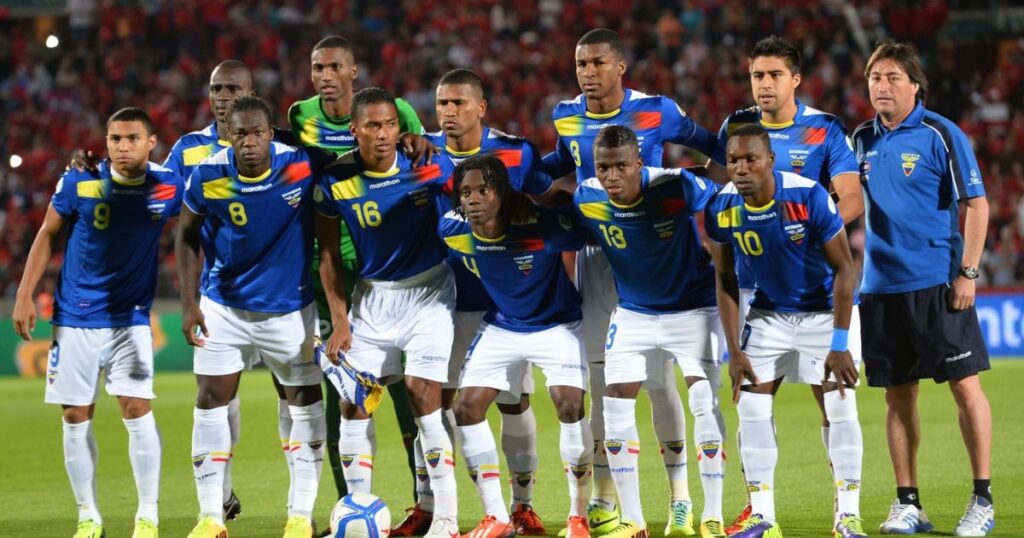
Football in Ecuador isn’t just a game—it’s a heartbeat. From the high-altitude pitches of Quito to the sun-soaked streets of Guayaquil, the Ecuador football team, affectionately known as La Tricolor, unites a nation of over 18 million passionate supporters. Nicknamed for the vibrant yellow, blue, and red stripes of their flag-inspired kits, this squad has transformed from an underdog into a formidable contender on the global stage. As we dive into their journey, we’ll explore the rich history, standout achievements, star players, tactical evolution, recent triumphs, what’s next on the horizon, the electric fan culture, and a bright future outlook. Whether you’re a die-hard follower or a curious newcomer, buckle up for an engaging look at why the Ecuador national football team is captivating fans worldwide.
A Storied History: From Humble Beginnings to World Cup Glory
The roots of the Ecuador football team trace back to the late 19th century, when British expatriates introduced the sport to the coastal city of Guayaquil. In 1899, brothers Juan Alfredo and Roberto Wright founded the Guayaquil Sport Club, marking the birth of organized football in the country. By 1925, the Ecuadorian Football Federation (FEF) was established, and Ecuador joined FIFA in 1926 and CONMEBOL a year later. Yet, their early international forays were modest. Declining an invitation to the inaugural 1930 FIFA World Cup due to funding issues, Ecuador made their debut in 1938 at the Bolivarian Games, drawing 1-1 with Bolivia before edging Colombia 2-1 for a bronze medal.
For decades, the Ecuador football team languished in South America’s shadow, overshadowed by giants like Brazil and Argentina. Limited infrastructure and resources hampered progress, with the squad often finishing near the bottom in Copa América tournaments. Their first notable high came in 1959, co-hosting the Copa América and securing a fourth-place finish—their best until 1993, when they repeated the feat. These tournaments were crucibles, forging resilience amid defeats.
The turning point arrived in the late 1990s. Under Colombian coach Hernán Darío Gómez, Ecuador shocked the continent with a 1-0 upset over Brazil in 2001 World Cup qualifying. This victory propelled them to a historic sixth-place finish in CONMEBOL standings, clinching their maiden World Cup berth for 2002 in South Korea/Japan. Agustín Delgado’s early strike against Mexico became a symbol of their breakthrough. Since then, the Ecuador national football team has qualified for four World Cups (2002, 2006, 2014, and 2022), evolving from perennial outsiders to consistent qualifiers. Today, with the 2026 tournament on home soil (co-hosted by the USA, Mexico, and Canada), their story feels like destiny unfolding.
Major Achievements: Milestones That Define La Tricolor
The Ecuador football team’s trophy cabinet may not overflow like their neighbors’, but their achievements punch above their weight. Their World Cup odyssey stands tallest: In 2002, they exited the group stage with dignity, drawing global eyes. 2006 in Germany was magical—advancing to the Round of 16 for the first time, only to fall 1-0 to England on David Beckham’s free-kick. Iván Kaviedes and Ulises de la Cruz shone, embodying Ecuador’s grit.
Copa América remains their continental proving ground. Beyond those fourth-place finishes in 1959 and 1993, they’ve notched memorable wins, like the 2021 quarterfinal run under Gustavo Alfaro, where they topped Venezuela and drew Brazil before a penalty shootout exit to Argentina. In qualifiers, they’ve leapfrogged powerhouses—finishing above Brazil and Uruguay in 2001, and repeating the feat in 2022 despite a three-point deduction for administrative issues.
Individually, stars like Alberto Spencer, the “Cannon of the Andes,” hold Copa Libertadores records with 54 goals for Peñarol. More recently, Enner Valencia’s six World Cup goals make him Ecuador’s all-time leading international scorer. These milestones aren’t just stats; they’re chapters in a narrative of perseverance, fueling the Ecuador FIFA ranking’s steady climb into the top 50.
| Major Achievements of the Ecuador Football Team |
|---|
| Tournament |
| FIFA World Cup Qualification |
| FIFA World Cup |
| Copa América |
| Bolivarian Games |
| World Cup Goals Record |
This table highlights key triumphs, showcasing how the Ecuador national football team has punched above its historical weight class.
Key Players: The Stars Powering La Tricolor
No discussion of the Ecuador football team is complete without spotlighting its talismans. Captain Enner Valencia, at 35, remains the heartbeat—a prolific striker with 40+ international goals, blending aerial prowess and clinical finishing. His brace in the 2022 World Cup opener against Qatar (2-0) etched him into lore. Moisés Caicedo, the 23-year-old Chelsea midfielder, is the engine: tireless, visionary, and a defensive rock who orchestrates transitions with Chelsea-level poise.
Defensively, Piero Hincapié (Bayer Leverkusen) anchors at 23, his ball-playing ability key to modern build-up play. Willian Pacho (PSG) complements him, forming a youthful backline brimming with potential. On the flanks, Ángelo Preciado (Sparta Rotterdam) delivers crosses like clockwork, while Kendry Páez, the 17-year-old Chelsea-bound prodigy, dazzles with dribbles and vision—already a qualifier standout.
Veterans like Félix Torres add steel, but the blend of experience and youth defines this squad. Legends like Antonio Valencia (Manchester United icon) and Iván Hurtado (“Bam Bam,” most-capped player with 168 appearances) paved the way. These players aren’t just athletes; they’re cultural heroes, inspiring kids in Quito’s academies to dream big.
Tactics and Style of Play: High-Altitude Hustle and Counterattacking Flair
The Ecuador football team’s style is a masterclass in adaptation—forged in the thin air of Quito’s 2,850-meter elevation, where opponents gasp while locals thrive. Under coaches like Sebastián Beccacece (current as of 2025), they favor a pragmatic 4-4-2 or fluid 4-2-3-1, emphasizing organization, intensity, and rapid transitions. Defensively compact, they press high to disrupt, then explode forward with vertical passes to Valencia’s runs or Caicedo’s surges.
Home advantage is tactical gold: The altitude saps visitors’ stamina, turning Estadio Olímpico Atahualpa (soon to be replaced) into a fortress. Away, they absorb pressure, countering with pace from Preciado and Páez. Alfaro’s 2022 blueprint—balanced, resilient—evolved into Beccacece’s nuanced tweaks, incorporating data-driven set-pieces (Ecuador leads CONMEBOL in aerial duels won). It’s not tiki-taka flair but efficient, South American soul: disciplined yet daring, turning limitations into lethal edges.
Recent Results: Momentum Building Toward 2026
The Ecuador national football team enters November 2025 on a high, unbeaten in 14 matches and locked into 2026 World Cup qualification. Their CONMEBOL campaign peaked with a gritty 1-0 win over Argentina in September 2025—Valencia’s late penalty sealing it despite red cards for Caicedo and Otamendi. Earlier, a 0-0 draw in Brazil showcased defensive mettle, while a 1-0 scrape past Peru underlined resilience.
In 2025 qualifiers, they’ve amassed 25 points from 15 games (projected), conceding just 12 goals. Friendlies have been preparatory gold: A 2-1 friendly win over the USA in October tested depth, with Páez assisting the winner. These results reflect tactical maturity—clean sheets in 60% of away games—and set the Ecuador FIFA ranking at a lofty 29th as of November 2025, their highest since 2006.
| Recent Results for the Ecuador Football Team (2025) |
|---|
| Date |
| Sep 10, 2025 |
| Jun 5, 2025 |
| Oct 10, 2025 |
| Nov 13, 2025 |
| Overall 2025 WC Qual: 7W-4D-4L, GF 18, GA 12 |
This table breaks down standout 2025 fixtures, helping readers grasp La Tricolor’s upward trajectory.
Upcoming Fixtures: Eyes on the Ecuador Next Match and Beyond
Excitement builds for the Ecuador next match on November 13, 2025—a friendly against Canada at BMO Field in Toronto. It’s prime prep for the December 5, 2025, World Cup draw, testing winter adaptability. Five days later, on November 18, they face New Zealand in Harrison, New Jersey—another tune-up against a fellow qualifier.
Post-November, 2026 ramps up: Group stage openers in June, likely against European or Asian foes. Copa América 2028 looms as a benchmark. With home-soil motivation (co-hosting vibes), these fixtures are stepping stones to deeper World Cup runs. Fans, mark your calendars—the Ecuador football team is gearing for glory.
Fan Culture: The Roar of La Tri Supporters
Ecuadorian football pulses with fervor—65% of the population tunes in, turning matchdays into carnivals. La Tri fans, clad in neon yellow, flood Estadio Olímpico Atahualpa, creating a cauldron of chants like “¡Ecuador, mi vida!” Rivalries with Peru and Colombia ignite street parties, while diaspora communities in the US and Spain host watch parties with ceviche and cumbia.
Supporter groups like “La Norte” lead the charge, waving condor flags and honoring fallen hero Christian Benítez (jersey #11 retired). Yet, passion has edges—FIFA fines for chants underscore calls for positivity. Globally, Ecuador fans travel en masse, their energy a export of national pride. It’s more than support; it’s identity, binding coast to highlands.
Future Outlook: A Golden Era on the Horizon
The Ecuador national football team’s trajectory screams potential. Qualified for 2026—their fifth World Cup—they eye a quarterfinal push, leveraging youth like Páez and Hincapié alongside Valencia’s fire. Beccacece’s tactics, youth academies (Independiente del Valle’s pipeline), and FEF investments promise sustainability. Challenges? Depth in goalkeeping and injury management. But with the Ecuador FIFA ranking at 29th and talents eyeing Europe, predictions point to top-20 status by 2028. La Tricolor isn’t just rising—they’re soaring, ready to etch new legends.